The Hidden Sephardic Soul of El Salvador’s Basílica del Pilar
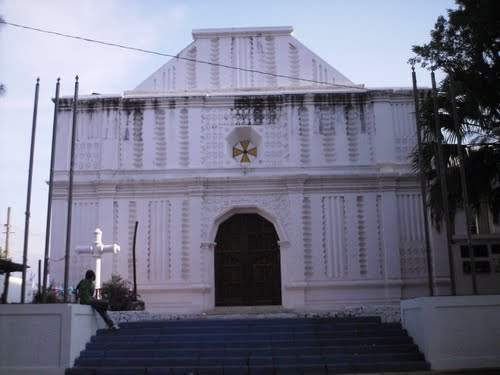
In the historical heart of San Vicente, El Salvador, stands a religious monument that completely defies the traditional laws of Spanish colonial architecture. While the region's 18th-century churches are defined by "Seismic Baroque" structures overflowing with heavy, multi-tiered facades and crowded niches of saintly statues, the Basílica Nuestra Señora del Pilar takes a radically different approach.
Built between 1762 and 1769, its exterior showcases an eerie, flat minimalism that almost mimics modern architectural abstraction. To the trained historical eye, however, the church doesn't just look distinct—it carries the clear visual signature of a secret Jewish heritage hidden in plain sight from the Spanish Crown.
                  +-----------------------------------+

                  |      BASÍLICA DEL PILAR (1769)    |
                  |  [Abstract, Iconoclastic Facade]  |
                  +-----------------------------------+
                                    |
            +-----------------------+-----------------------+

            |                                               |
  [THE STRUCTURAL MYSTERY]                         [THE GENEALOGICAL ROOTS]
  - Absolute Iconoclasm (No Statues)               - Surnames: Arce, Merino, Quintanilla
  - Geometry over Heavy Ornamentation              - Heavily documented Converso lineages
  - Bas-Relief Solomonic Columns                   - Over-compensating via "Marian Miracles"
    (Homage to King Solomon's Temple)               to evade the Spanish Inquisition
The Geometry of Survival: Why It Looks So Different
The visual landscape of colonial Latin America was heavily shaped by the Counter-Reformation, a movement where the Catholic Church used dramatic, booming art to captivate the public. Yet, the Basílica del Pilar completely strips away this heavy decoration, rendering a structural form that stands out for three primary reasons:
- Absolute Iconoclasm: The front facade completely lacks physical statues or carved deities. This strict avoidance of human images directly aligns with iconoclasm—a central tenet of Judaism based on the Second Commandment forbidding graven images.
- The Austere Flat Facade: During the Baroque era, European synagogues were forced by discriminatory royal laws to remain architecturally flat and visually inconspicuous from the street to avoid drawing public ire. The flat, geometric layout of El Pilar closely mirrors the precise aesthetic preferences preserved by Jewish builders of that era.
- Bas-Relief Solomonic Columns: Rather than constructing heavy, freestanding pillars that project outward, the church's creators carved Solomonic (twisted) columns directly into the flat wall in bas-relief. While the Church associated these twists with Rome, to families preserving hidden Jewish roots, the twisted column is a deliberate nod to Boaz and Jachin—the two legendary copper pillars that guarded the entrance to the First Temple of King Solomon in Jerusalem.
Surnames, Miracles, and the Inquisition
The secret behind this architecture is found in the genealogical records of the exact elite families who built it. The history of El Pilar began as a small, private family chapel constructed from calicanto (mortar, lime, and stone) by the wealthy couple Don José Luis Merino and Doña Manuela de Arce.
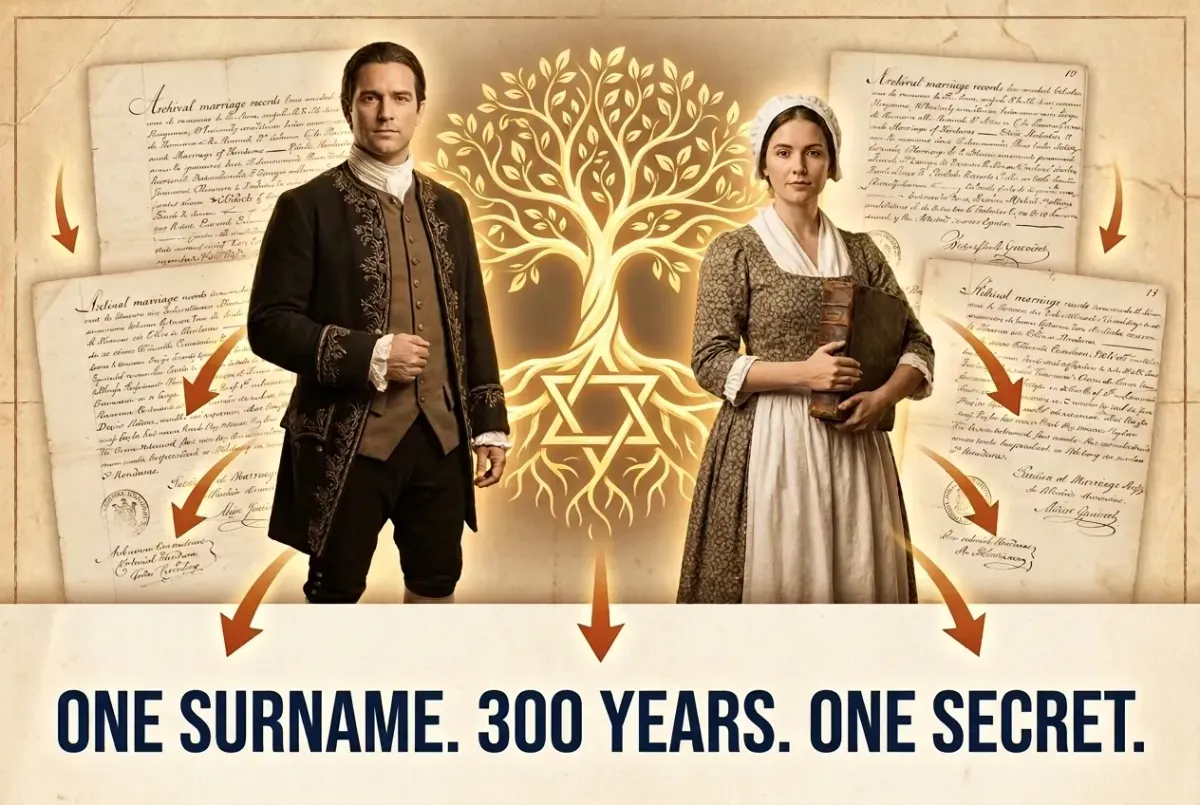
Both Arce and Merino are heavily documented sephardic surnames found extensively within Spanish Inquisition registries, marking families of Conversos (Jews forced to convert to Catholicism). To survive the watchful eye of the Inquisition, hidden Jewish networks relied entirely on closed, endogamous marital alliances to protect their secrets.
Far from being disconnected parties, the Arce, Merino, and Quintanilla lineages were tightly related by blood and marriage—evidenced by local records of high-profile unions, such as that of San Vicente's Mayor, Don Diego Merino, to Doña María Ignacia de Quintanilla. When the original childless couple passed away, their chapel plot smoothly transitioned to their wealthy kinsman, Don Francisco Quintanilla, keeping the delicate building project completely inside a trusted family loop.
In colonial Central America, crypto-Jewish families constantly faced the threat of execution if suspected of practicing ancestral rites at home. A common survival tactic was to over-compensate publicly with theatrical displays of Catholic piety.
This explains the famous local legend tied to the church: the family claimed the chapel was funded out of gratitude because a painting of the Virgin Mary miraculously shook to save Don José from being stabbed by his jealous wife. By attributing their private family property to a spectacular Marian miracle, this tight-knit network successfully constructed an absolute legal insurance policy, shielding their descendants from heresy investigations.
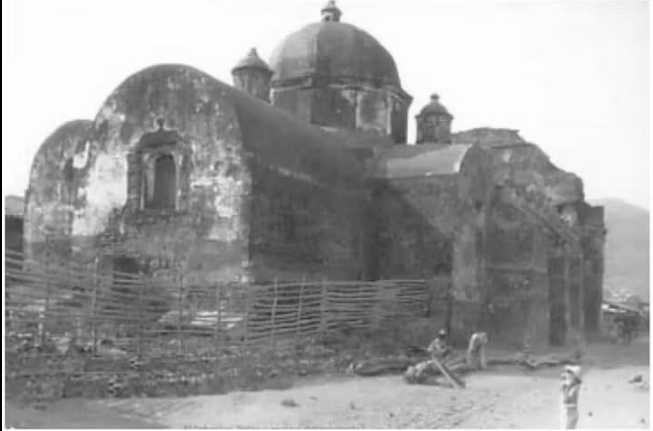
The Quintanilla Legacy and the Papal Shield
In 1762, Don Francisco Quintanilla and his daughters (María del Pilar, Manuela, and Micaela) poured their immense merchant fortune into completely expanding his family's existing estate into the grand stone basilica seen today, completing it in 1769.
The Quintanillas belonged to an affluent network of families who specifically settled in San Vicente to maintain economic and geographic autonomy from the central religious authorities in Guatemala. Upon completion, the family executed a brilliant legal maneuver: they fully opened the upper church to the public, donating it to the city.
To make this donation permanent and untouchable by colonial governors or the Inquisition, they petitioned the Vatican. On December 18, 1772, Pope Clement XIV issued a formal breve (papal decree) granting special canonical privileges to the building. This act conferred sacred immunity upon the church. By opening it to the public under the Pope’s seal, the Quintanillas ensured that the Crown could never seize the property or dismantle the structural code they had embedded into its stone.
The Crypt of the Emancipator: A Sanctuary from Crisis
While the upper sanctuary belonged to the public, the subterranean world remained strictly the private property of the Quintanilla mausoleum. However, this rule was famously broken in March 1838 due to a medical and geopolitical crisis.
José Simeón Cañas, the revered Salvadoran priest and statesman who successfully secured the absolute abolition of slavery across Central America in the 1820s, contracted Asiatic Cholera during a catastrophic global pandemic. Complicated by a stroke, Cañas passed away on March 4, 1838. Because of strict quarantine laws, highly infectious bodies could not be transported between departments; he had to be buried immediately exactly where he died.
At that moment in history, civil unrest was tearing El Salvador apart, and San Vicente was serving as the temporary national capital. Ordinary cemeteries were vulnerable to desecration by passing armies or rebellions. The Cañas, Arce, and Quintanilla families belonged to the exact same tightly knit social and historical network. To protect the remains of the great emancipator, the Quintanillas opened their heavily fortified, subterranean vault. Behind the ultra-thick, anti-seismic calicanto walls of El Pilar, Cañas found a permanent, secure sanctuary alongside his relative and fellow statesman, Dr. Antonio José Cañas (who was buried there in 1844).
A Silent Monolith of Resilience
Today, the structural design of the Basílica Nuestra Señora del Pilar aligns seamlessly with modern genetic and historical research. Educational and cultural efforts, such as those highlighted by Kulanu International, have extensively mapped a widespread Crypto-Jewish revival across El Salvador. Thousands of families in San Vicente and neighboring departments have discovered that their quirky family traditions—like sweeping floors toward the center of a room, covering mirrors during mourning, or lighting candles on Friday evenings—are actually preserved Sephardic customs passed down secretly through the generations.
El Pilar stands as a triumphant architectural artifact of this survival story:
a building that satisfied the Spanish crown on paper, but whose geometry, lines, and stone whispered the unbroken heritage of the people who built it.
The Probability of Heritage vs. Practice
The Probability of Heritage vs. Practice. To draw a definitive historical conclusion about the people who raised these stones, modern scholarship must look closely at the math of identity. When analyzing the creators of the Basílica del Pilar, we must separate ethnic ancestry from operational daily religion:1. The Probability They Were Ethnically Jewish: ~90%+ (Very High) There is immense historical certainty regarding their Sephardic lineage: [1]
- The Surnames: Surnames like Arce, Merino, and Quintanilla are deeply documented in Spanish and Portuguese Inquisition registries as Nuevos Cristianos (New Christians). In the Spanish colonial caste system (limpieza de sangre), having these specific lineages meant you were almost certainly descended from Jews who were forced to convert in 1492. [1,]
- The Migration Patterns: The families who left the major administrative cities of Guatemala to establish San Vicente in 1635 did so explicitly to escape the strict eyes of the royal authorities and church bishops. Settling in isolated, wealthy agricultural communities (thriving on indigo and cacao) was a classic pattern for wealthy Sephardic Converso merchant networks throughout the Americas.
The Probability They Were Active, Practicing Crypto-Jews in 1762: ~10% to 20% (Low to Moderate). While they were undoubtedly of Jewish descent, it is statistically unlikely that they were fully observing Jewish law (Halakha) by the late 18th century:
- The Timeline of Acculturation: The church was completed in 1769. By this time, nearly 300 years (roughly 10 to 12 generations) had passed since their ancestors were expelled from Spain. Without access to Hebrew Bibles, Torah scrolls, rabbis, or Jewish calendars, the vast majority of Converso families in Latin America had completely lost their formal theological knowledge of Judaism by the mid-1700s.
Historical Sources and Research Archives
- National Monument & Structural Timeline Documents: Read the historical architecture logs tracing the 1762 transition from the Merino-Arce estate to the full brick-and-mortar basilica via the EcuRed Cultural Database - Iglesia del Pilar.
- Crypt Records & Historical San Vicente Context: Review the regional civic records declaring the property a national landmark and sheltering the remains of José Simeón Cañas on the #Historia San Vicente Archive.
- Crypto-Jewish Lineages & Traditions in El Salvador: Explore the comprehensive anthropological studies detailing family lineages and ancestral customs preserved throughout the country via Kulanu International - El Salvador Diaspora Hub.
- Sephardic Surname Inquiries & Converso History: Analyze the historical survival mechanics of New Christians in colonial Latin America via Unpacked Media - The Story of Latin America's Crypto-Jews.
- Architectural Profiles & Colonial Faith Narratives: Examine the religious art descriptions and traditional miracle profiles of San Vicente's structures on Turismo Religioso Americas - El Pilar Profile.